
Choosing the right 3PL warehouse location can make or break your fulfillment costs and your delivery speed. It is one of the few decisions that touches every single order you ship, every month, for as long as you run the business. This guide compares Toronto against Vancouver, Montreal and Calgary on delivery times, storage rates, shipping costs and total cost of ownership, then gives you a five-question framework to make the call for your own brand.
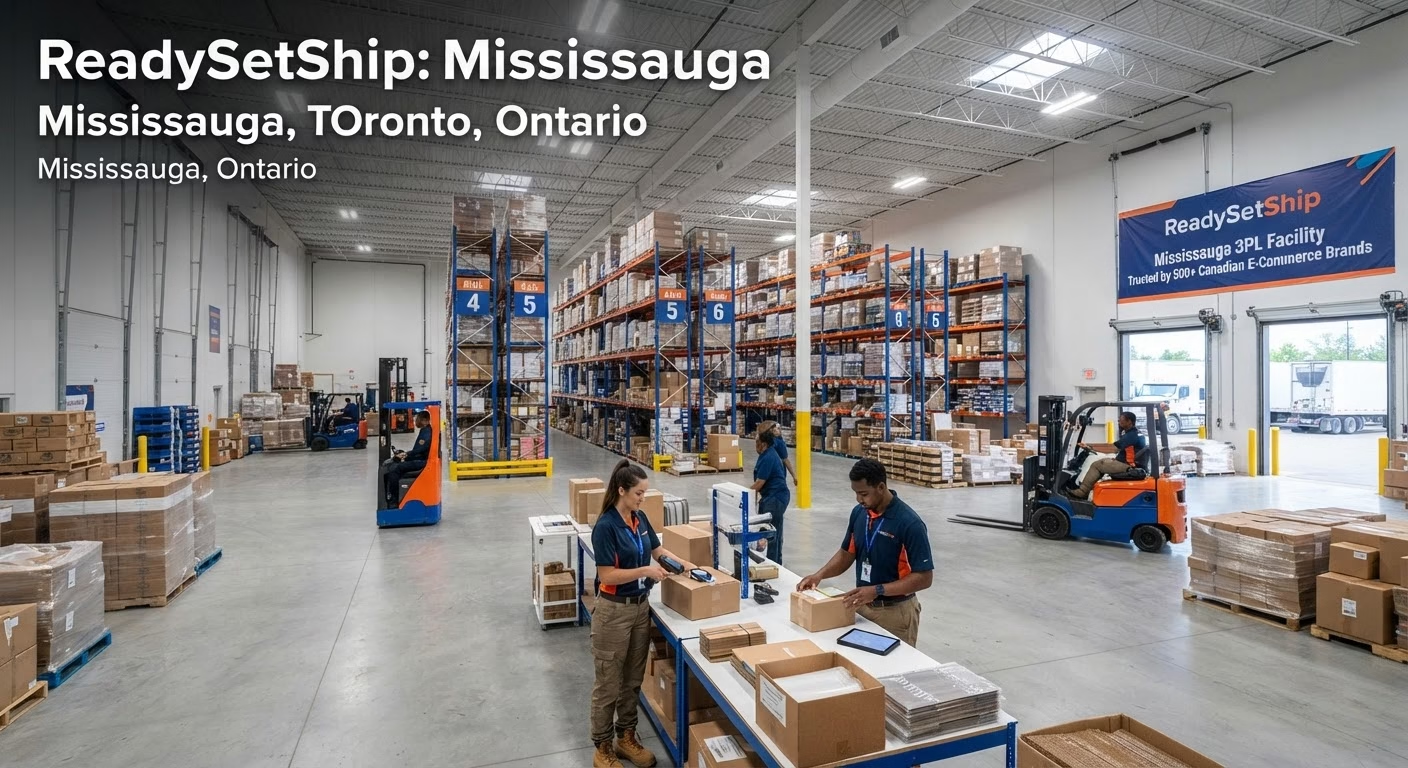
Toronto remains the default fulfillment hub for Canadian e-commerce, but it is not automatically the right answer for every brand
Where Should Your E-Commerce Business Store Inventory?
Most Canadian e-commerce brands end up looking at the same four cities, often called the Strategic Quad: Toronto, Vancouver, Montreal and Calgary. Each one has a genuine case behind it. Vancouver is the Pacific gateway. Montreal owns Eastern Canada. Calgary is the cheapest place in the country to hold a pallet. And a 3PL warehouse Toronto operation sits closest to the largest concentration of Canadian buyers.
So is Toronto really the best choice for your 3PL warehouse? Not automatically. The honest answer depends on three things: where your customers actually live, how many orders you ship per month, and how much inventory value you are carrying at any given time. Get those three inputs right and the location decision usually makes itself.
What follows is a working comparison rather than a sales pitch. If you are still deciding whether outsourcing makes sense at all, our guide to 3PL services in Canada covers that question first, including when a 3PL is the wrong choice for your stage.
The short version: for brands shipping nationally, Toronto is the most expensive hub on storage and still the cheapest overall, because central location lowers average shipping cost per order. Storage is fixed. Shipping scales with growth.
Why 3PL Location Matters for E-Commerce
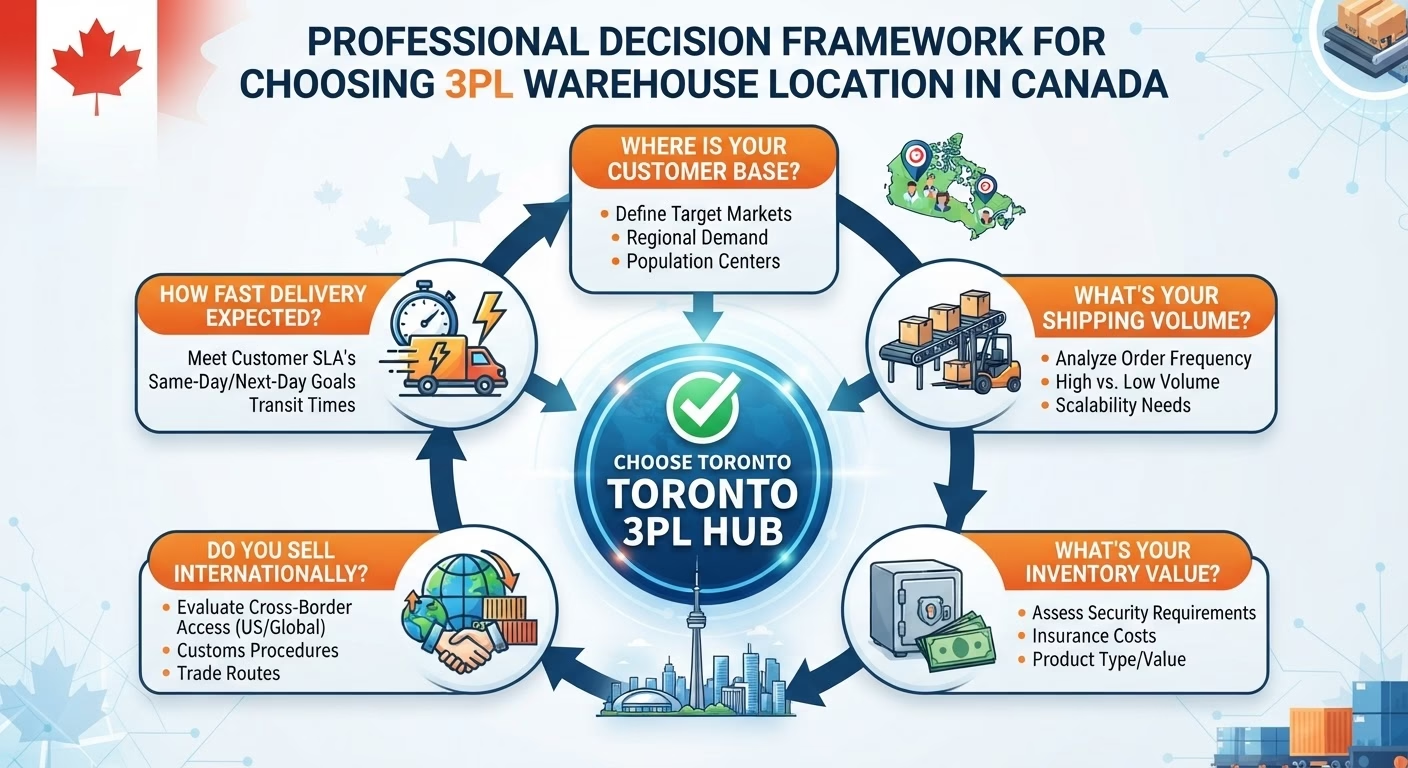
Pick and pack rates look similar across Canadian hubs. The real cost difference shows up on the outbound shipping line
Warehouse location is not a back-office detail. It quietly sets the ceiling on four things that drive revenue directly.
Delivery speed
A 3PL warehouse Toronto facility can reach roughly 40% of Canada's population within 24 to 48 hours, based on population distribution data published by Statistics Canada. Shipping the same order from Vancouver or Calgary to an Ontario customer typically takes 3 to 5 business days. Montreal holds a strong position for Quebec and the Atlantic provinces but still needs 2 to 3 days to serve Ontario properly.
Cost structure
Industrial real estate, labour availability and local wage rates all vary by city, and those differences flow straight into your storage and pick and pack rates. National industrial market reports from firms such as CBRE Canada consistently show a gap of 40% or more per square foot between the most and least expensive Canadian markets.
Carrier access
Being near a major carrier hub means better negotiated rates and later cut-off times. The GTA sits beside Toronto Pearson International Airport and has dense coverage from Canada Post, UPS, FedEx, DHL and Purolator. That density is why 3PL GTA providers can usually negotiate stronger discounts than facilities in smaller markets.
Customer expectations
Fast, affordable shipping lifts conversion rates and repeat purchase rates. If your warehouse sits three provinces away from most of your buyers, you are either absorbing the shipping cost or passing it on at checkout, and both hurt. Our fulfillment solutions for e-commerce and B2B page walks through how this plays out operationally.
FAQs: Why Location Matters
Toronto 3PL Warehousing: The Market Leader
Why Toronto dominates Canadian e-commerce fulfillment
Toronto did not become the default fulfillment hub by accident. Several advantages stack on top of each other:
- Roughly 40% of Canada's population sits inside a 24-hour delivery radius
- The Greater Toronto Area holds the highest concentration of 3PL facilities in the country, with 175+ operational logistics facilities in the region
- Toronto Pearson International Airport is on the doorstep, which matters for air freight and expedited lanes
- Direct highway access to the US border makes cross-border shipping straightforward under CBSA and US CBP processes
- Every major carrier has a strong presence, which means real rate competition rather than take-it-or-leave-it pricing
Practically, this means same-day fulfillment is achievable for GTA orders and next-day is realistic across most of Ontario and Quebec. Our order fulfillment service is built around those carrier cut-off windows, and our 3PL warehousing operation is set up to support them.
Toronto 3PL pricing breakdown
Here is what 3PL fulfillment Toronto pricing typically looks like. Rates vary by facility, monthly volume and whether you need climate control.
| Cost Item | Typical Price | Notes |
|---|---|---|
| Monthly storage (per pallet) | $13 to $20 | Varies by facility and climate control requirements |
| Pick and pack (per order) | $2 to $5 | Depends on SKU count and packaging complexity |
| Fulfillment (per unit shipped) | $0.50 to $1.50 | Carrier dependent |
| Receiving (per pallet) | $15 to $30 | Labour intensive, higher for floor-loaded containers |
Toronto sits in the middle of the national range. It runs higher than Calgary and the Prairie provinces, and generally lower than Vancouver, where the real estate premium pushes warehousing costs up. You can compare these figures against our published rates on the pricing page.
Toronto's competitive advantages
- Platform integrations already exist. The Shopify, Amazon Canada and WooCommerce ecosystems are well established across the GTA, so connecting your store is usually a same-week job rather than a custom integration project.
- Flexible terms are common. A number of 3PL GTA providers, including ReadySetShip, work month to month with no minimum volume commitment.
- Multichannel from one roof. DTC, Amazon FBA prep, kitting and assembly and B2B fulfillment can all run out of a single Toronto warehousing facility.
- Speed is standard, not premium. Same-day processing in the GTA is the baseline expectation rather than an upgrade you pay extra for.
FAQs: Toronto 3PL Warehousing
Toronto vs Vancouver, Montreal and Calgary
Delivery radius, not rent per square foot, is what separates the four Canadian hubs in practice
Toronto vs Vancouver: the Western gateway
Vancouver is the strongest alternative for brands with a Pacific-facing supply chain.
Where Vancouver wins: it is the natural landing point for imports arriving through the Port of Vancouver from China, Vietnam and Japan, which cuts drayage costs if most of your inventory arrives by sea from Asia. Industrial space runs roughly 15 to 20% cheaper than comparable Toronto facilities, with storage around $10 to $15 per pallet. It is also the obvious base if you sell heavily into British Columbia and the US West Coast.
Where it falls short: delivery to Toronto takes 4 to 6 days and Montreal is 5 days or more. The talent pool for specialised fulfillment work is smaller, and outbound shipping costs to Eastern Canada are consistently higher. For a DTC brand with a nationwide audience, that eastbound penalty applies to the majority of your orders.
Choose Vancouver if: you sell primarily into Western Canada, you import heavily across the Pacific, or you are an international brand entering Canada through the West Coast. If you need both directions covered, our local and global shipping capability handles international lanes from the GTA without forcing a second facility.
Toronto vs Montreal: the Eastern Canada hub
Where Montreal wins: it dominates delivery into Quebec and the Atlantic provinces, and it is well connected to European supply chains through the Port of Montreal. Labour costs run around 5 to 10% below Toronto, and storage sits at roughly $11 to $16 per pallet. Quebec's e-commerce market continues to grow, and being local carries real weight with those customers.
Where it falls short: reaching Ontario and Western Canada adds 2 to 3 days. The 3PL provider ecosystem is noticeably smaller than the GTA, which means less competitive tension on pricing. Bilingual operations are a genuine requirement rather than a nice-to-have under Quebec language legislation, and that adds cost and hiring complexity. Westbound shipping carries a distance penalty on almost every order.
Choose Montreal if: Quebec and Atlantic Canada make up the bulk of your orders, you need French-language fulfillment support, or your suppliers ship through Montreal from Europe.
Toronto vs Calgary: the Prairie logistics hub
Where Calgary wins: storage runs about $9 to $12 per pallet, the lowest of the Strategic Quad. It is centrally placed for Alberta, Saskatchewan and Manitoba, and it delivers into Western Canada faster than anywhere except Vancouver. The local tech and startup scene is also driving up regional e-commerce activity.
Where it falls short: Toronto is 3 to 4 days out and Montreal is 5 to 6. There are fewer 3PL providers to choose from, and less carrier competition means eastbound shipping typically costs 20 to 30% more than the same lane from a Toronto base. For a nationwide brand, that surcharge lands on most of your volume.
Quick takeaway: choose Calgary if 80% or more of your customer base is in Western Canada. Otherwise Toronto's speed advantage pays for itself. Either way, disciplined warehousing and inventory management matters more than the postcode once volume climbs.
FAQs: Hub Comparison
Total Cost of Ownership: The Numbers
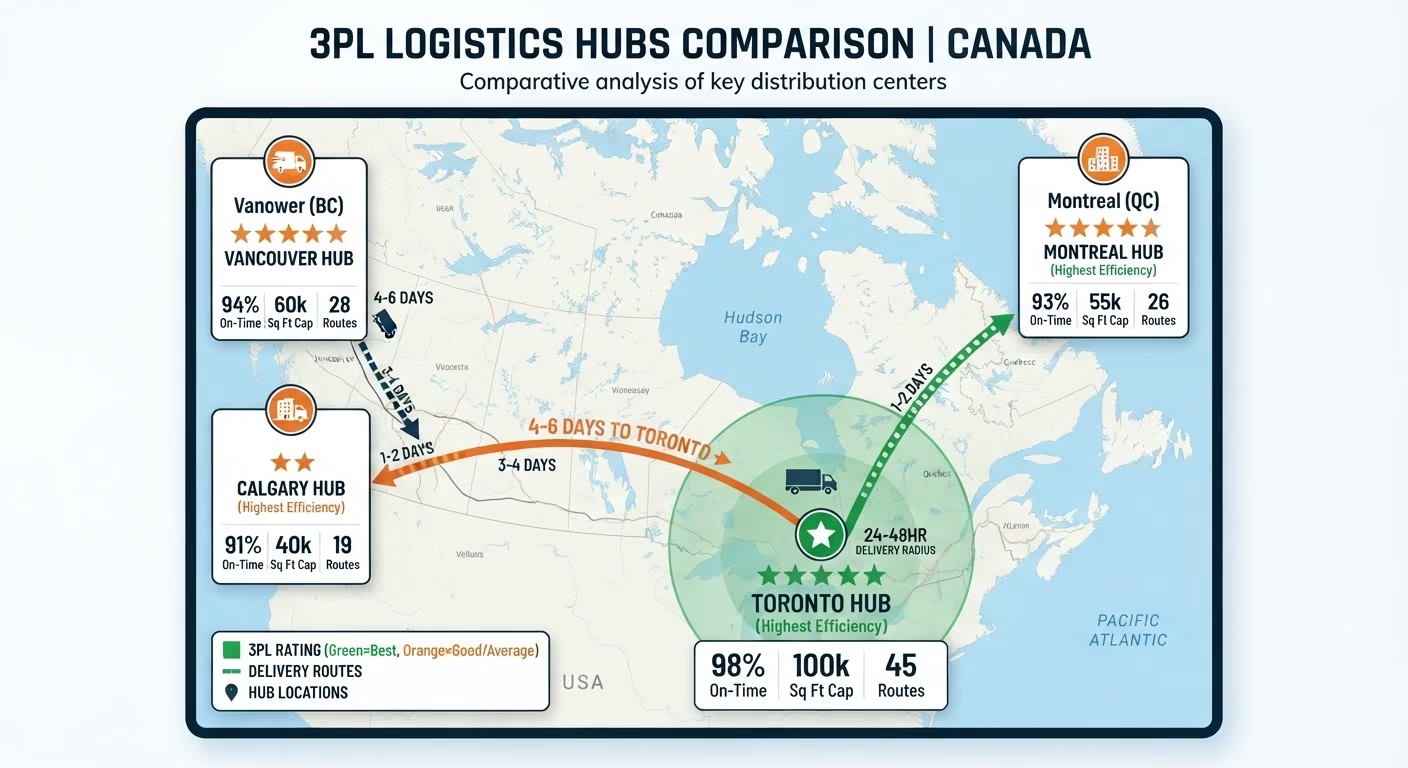
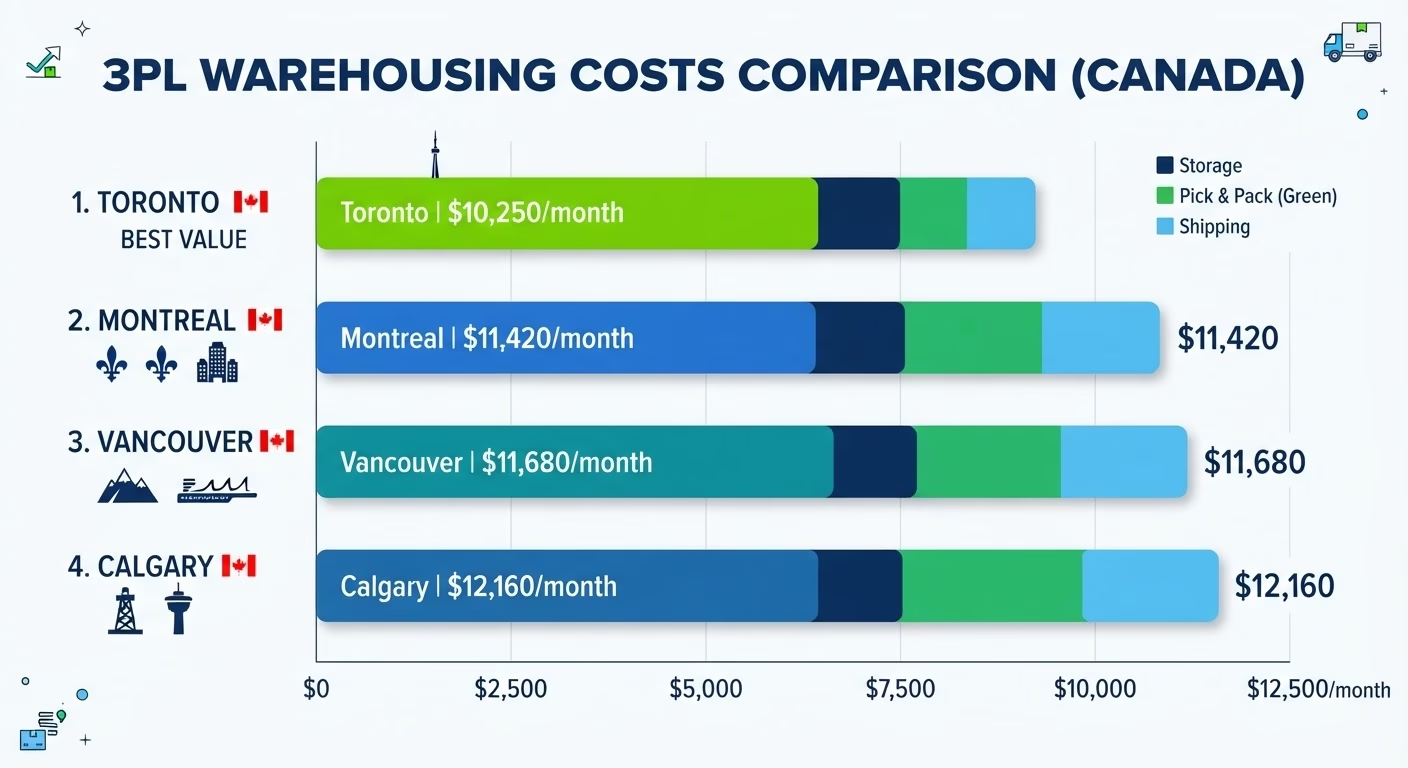
Toronto is the most expensive hub on storage and still the cheapest on annual total cost for a nationwide shipper
Storage rates get all the attention, but they are rarely the deciding factor. Here is a scenario based on 2,000 orders per month and roughly $50,000 of inventory on hand.
| Location | Storage | Pick and Pack | Shipping (avg) | Total Monthly | Annual |
|---|---|---|---|---|---|
| Toronto | $250 | $4,000 | $6,000 | $10,250 | $123,000 |
| Montreal | $220 | $4,000 | $7,200 | $11,420 | $137,040 |
| Vancouver | $180 | $4,000 | $7,500 | $11,680 | $140,160 |
| Calgary | $160 | $4,000 | $8,000 | $12,160 | $145,920 |
Toronto carries the highest storage line and still lands 12 to 20% cheaper on an annual basis for a nationwide shipper. The logic is simple. Storage is fixed and predictable. Shipping scales directly with order volume and is the single most cost-sensitive variable in your fulfillment budget. A central location lowers your average shipping cost on every order, and that compounds month over month.
The practical rule: optimise for shipping cost per order, not for rent per pallet. If you want these numbers modelled against your real order history rather than a sample, our custom logistics team can run it.
The Strategic Quad: When Multi-Location Makes Sense
Larger e-commerce brands often run two or three hubs to cover the country properly. The usual structure looks like this:
Toronto, Primary
Covers 40% of Canada plus the fastest route into the US market
Vancouver, Optional
Western Canada plus Asia-facing supply chains and Pacific imports
Montreal, Optional
Quebec and Atlantic coverage, worth adding past roughly $2M revenue
Review Point
Re-model the split every two quarters as your order mix shifts
The trigger points for adding a second location are fairly consistent: monthly order volume above 5,000, a customer base split roughly evenly between East and West, or international shipping making up 20% or more of revenue.
Be honest about the trade-off. Splitting inventory across sites adds forecasting complexity, raises the risk of stockouts in the wrong region, and increases total safety stock. The upside is faster delivery, which lifts conversion and repeat orders. Typical breakeven on a second hub lands somewhere between 12 and 18 months. Brands running split inventory also lean harder on returns and reverse logistics discipline, since misrouted returns multiply across locations.
FAQs: Multi-Hub Strategy
How to Choose the Right 3PL Location for Your Business
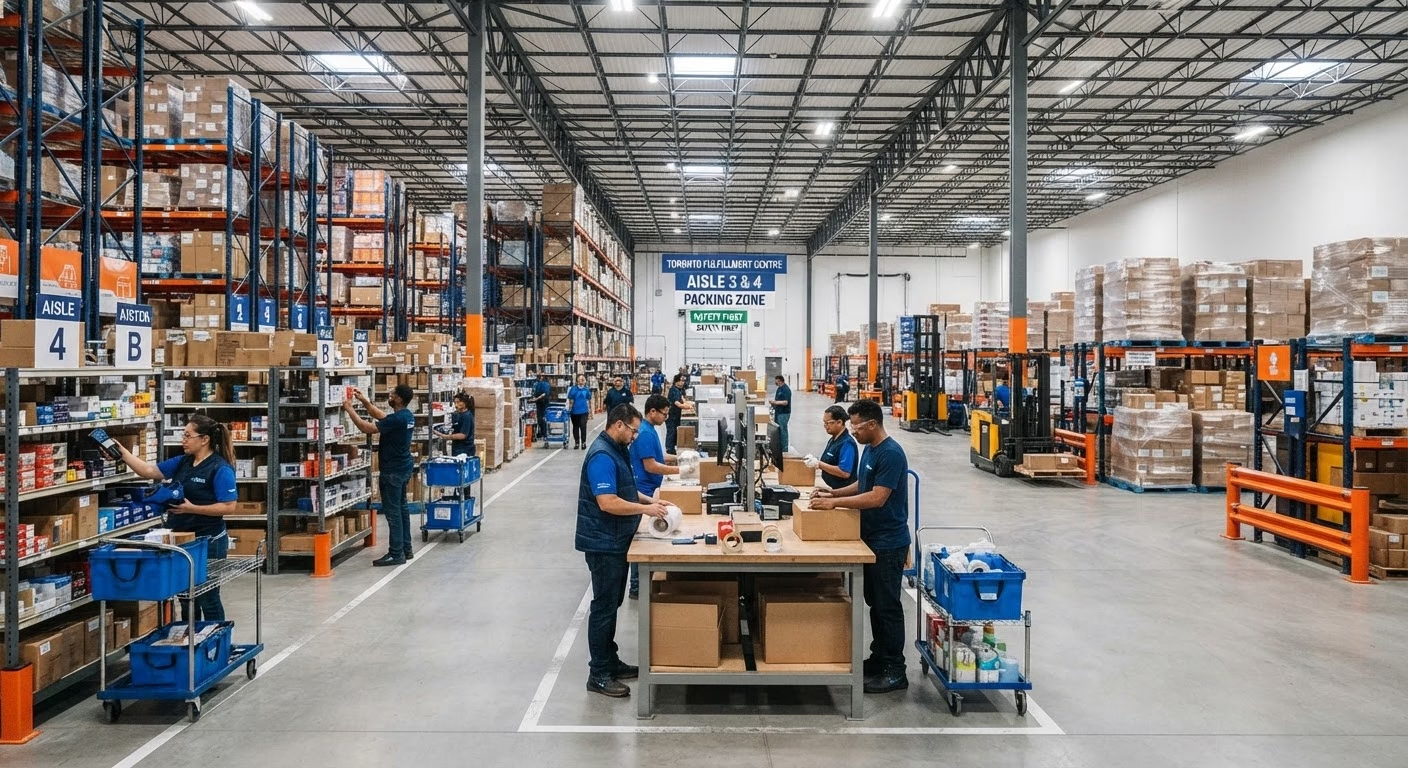
Work through these five questions in order. The first one settles the decision for most brands
1. Where is your customer base?
80% or more in Ontario and Quebec points to Toronto. 80% or more in Western Canada points to Vancouver or Calgary. Spread nationally defaults to Toronto, with a second hub considered once you pass 5,000 orders a month.
2. What is your shipping volume?
Under 500 orders a month, almost any hub works and you should optimise on price. Between 500 and 2,000, central location starts to matter significantly. Above 2,000, the case for a multi-hub setup becomes worth modelling properly.
3. What is your inventory value?
Under $10,000, storage cost is a rounding error and you should chase the shipping advantage. Between $10,000 and $50,000, a balanced approach favours Toronto. Above $50,000, multi-hub economics start to work.
4. Do you sell internationally?
Mostly US, Toronto makes cross-border simplest under CUSMA trade rules. Heavy Asia trade points to Vancouver. Europe-facing supply chains give Montreal an edge.
5. How fast do your customers expect delivery?
If next-day is the expectation in your category, a 3PL warehouse Toronto location is close to mandatory for national coverage. If 2 to 3 days is acceptable, other hubs stay viable. If 5 days is fine, cost should drive the decision.
Before you sign: run the math at your worst month, not your average one. A location that works at 1,200 orders can quietly break your margin during a Q4 spike if the provider has no guaranteed capacity in your agreement.
For most brands the sensible path is to start with Toronto, then revisit when monthly orders pass 5,000, shipping exceeds 45% of your fulfillment spend, or a single region grows past 30% of your customer base. If you want a second opinion on your specific numbers, talk to a fulfillment specialist before committing to a contract.
Why ReadySetShip's Mississauga Location Works
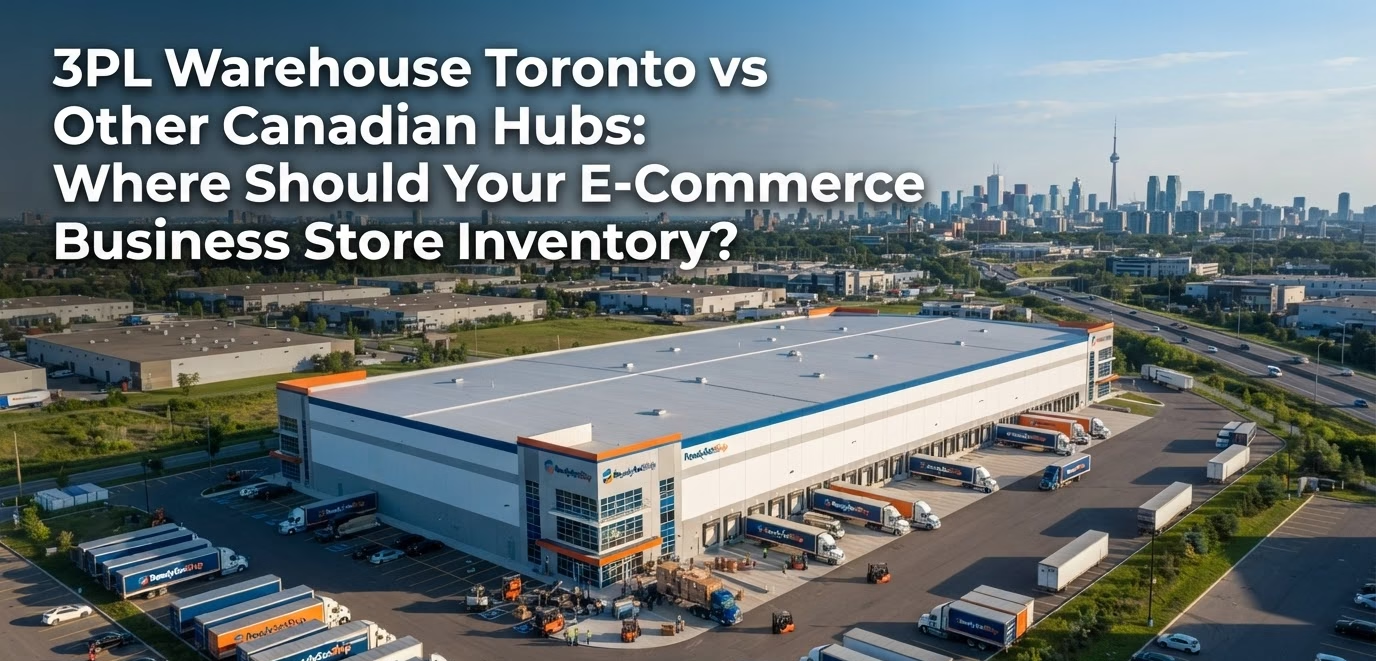
Our Mississauga facility sits inside the GTA with direct carrier access, without the downtown Toronto real estate premium
Our facility sits in Mississauga, inside the Greater Toronto Area. That is a deliberate choice rather than a compromise. You get the GTA delivery radius and carrier density at rates that downtown Toronto facilities struggle to match. Full details are on our 3PL warehouse Toronto and Mississauga page, and more about how we operate is on our about us page.
Order Fulfillment
Pick, pack and ship with same-day dispatch for GTA orders received before the 2PM cutoff.
Warehousing
Bin-level inventory tracking, real-time dashboard visibility and cycle counting on every account.
Kitting and Assembly
Bundle creation, multi-SKU assembly and subscription box fulfillment without disrupting standard pick lanes.
Returns Management
Inspection, grading and restocking within 48 hours, which keeps inventory counts and reporting honest.
Amazon FBA Prep
FNSKU labeling, poly bagging, bundling and direct-to-Amazon shipping, compliant with current inbound standards.
B2B Fulfillment
Retailer and wholesale shipments with EDI compliance, pallet prep and routing guide adherence.
Not Sure Which Hub Fits Your Business?
We will run a free location analysis against your actual order data and show you the real cost difference between Toronto and the alternatives. No obligation, no contract required.
- GTA delivery radius without the downtown Toronto real estate premium
- Same-day dispatch for GTA orders received before 2PM
- No contracts, no minimums, scale up for Q4 and back down after
- Bin-level accuracy with 99.5% inventory accuracy as standard
- Transparent pricing published up front, not hidden behind a quote form
Location: 1707 Sismet Rd, Unit 6, Mississauga, ON, L4W 2K8
Phone: +1 647 785 7839 | Email: sales@readysetship.ca
FAQs: ReadySetShip and Mississauga
The Bottom Line
Toronto remains Canada's leading 3PL hub for nationwide e-commerce, and the reason is population density rather than marketing. Reaching 40% of the country inside 24 to 48 hours lowers your average shipping cost on every order, which is the line item that scales with growth.
Vancouver, Montreal and Calgary each make genuine sense for a specific regional or supply-chain profile, and a multi-hub strategy becomes worth modelling once you are past roughly 5,000 orders a month. Rank your decision this way: customer geography first, then shipping volume, then inventory value. That order will get you to the right answer faster than any pricing table.
Key Takeaways
- Toronto reaches 40% of Canada within 24 to 48 hours, which no other single hub matches
- Toronto is the most expensive hub on storage and still 12 to 20% cheaper annually for nationwide shippers
- Optimise for shipping cost per order, not rent per pallet, because shipping is what scales with growth
- Vancouver suits Pacific imports, Montreal suits Quebec and Europe, Calgary suits Prairie-focused brands
- A second hub becomes viable at 5,000+ orders per month with a 12 to 18 month breakeven
- ReadySetShip offers order fulfillment, warehousing, kitting and assembly, returns management, B2B fulfillment and Amazon FBA prep from Mississauga, Ontario
- ReadySetShip: 3PL Warehouse Toronto and Mississauga
- ReadySetShip: Order Fulfillment Services Canada
- ReadySetShip: Warehousing and Inventory Management
- ReadySetShip: Custom Logistics Solutions
- ReadySetShip: Global and Cross-Border Shipping
- ReadySetShip: Pricing and Quotes
- Statistics Canada: Population and Demographic Data
- Canada Border Services Agency: Import and Export Requirements
- CBRE Canada: Industrial Real Estate Market Reports
- Toronto Pearson International Airport: Cargo Operations
- Canada Post: Business Shipping Services
ReadySetShip is a Mississauga, Ontario-based 3PL fulfillment company serving Canadian e-commerce brands and Amazon sellers. Located at 1707 Sismet Rd, Unit 6, we offer order fulfillment, warehousing, kitting and assembly, returns management, B2B fulfillment and Amazon FBA prep services. No contracts, no minimums, no hidden fees.